Cal Poly marine expert says strong El Niño could affect sea life, kelp
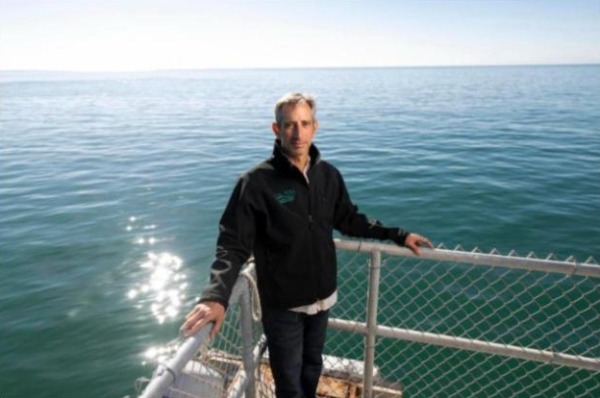
Ben Ruttenberg, director of Cal Poly’s Center for Coastal Marine Sciences. Photo by Joe Johnston
Center director to speak at virtual event Oct. 7; pier open house set for Oct. 10
– The expected “super” El Niño weather season ahead could affect a variety of species that live in the ocean and on coastal land, according to the director of Cal Poly’s Center for Coastal Marine Sciences.
Ben Ruttenberg described this year’s anticipated El Niño as perhaps the strongest the West Coast will have experienced in many decades. In addition to the likelihood of significantly more rain, Ruttenberg said the effects will weaken trade winds and upwelling, bringing warmer ocean water that will raise sea levels by up to six inches to a foot. The conditions will increase competition for food as nutrient sources decline, including plankton and kelp that thrive in cold, nutrient-rich upwelling areas.
“Those nutrients fuel the entire food web,” Ruttenberg said. “Phytoplankton and zooplankton eaten by small fish will be less available, meaning less food for whales, sea lions, seals, seabirds, and the whole host of organisms that forage on them.”
The last significant marine-impacting climate pattern, a North Pacific Ocean heat wave known as “the Blob,” combined with a strong El Niño between 2014 and 2016 and had substantial effects on a range of species, according to Cal Poly. Among other effects, it contributed to the deaths of an estimated 4 million common murre seabirds in Alaska from mass starvation and in part led to the loss of kelp forests throughout Northern California.
El Niño is caused by the weakening or reversal of east-to-west trade winds across the tropical Pacific Ocean, causing relatively warm offshore conditions in the eastern Pacific from South America as far north as California and the Pacific Northwest. Because of coastal winds, there will likely still be some upwelling near shore, bringing slightly cooler water and more nutrients closer to land. As a result, key prey species such as baitfish and krill may be found closer to the coast than normal.
“If you like whale watching, there will likely be many more whales closer to shore this year,” Ruttenberg said. “It’s good for whale watching, but bad for the marine mammals because it puts them in closer proximity to activities involving people, including vessels and fishing gear.”
California Gov. Gavin Newsom has declared a state of emergency as the storm season develops. Based on National Oceanic and Atmospheric Administration forecasts, Ruttenberg said December, January, and February are likely to see the strongest effects from El Niño, though conditions may last well into spring.
For safety preparedness, Ruttenberg recommends that residents clean rain gutters, ensure adequate drainage, and trim overhanging branches that could damage property.
“While the severity of the conditions can vary, extreme rain events and the potential for flooding are more likely this year,” Ruttenberg said. “And like in any emergency, it will be good to have batteries, clean drinking water, and food on hand in case there’s a massive event, and you have to leave your house, or you’re stuck for a few days without power.”
Ruttenberg will be part of a speaker panel at a virtual event on El Niño’s implications, hosted by the Woods Hole Oceanographic Institution, on Wednesday, Oct. 7 from 4:30 to 5:30 p.m. The event is open to the public.
The public may also learn more about marine science and ask Cal Poly experts about El Niño at the Cal Poly Pier Open House in Avila Beach on Saturday, Oct. 10. The event also celebrates the 25th anniversary of the university’s pier acquisition and will include touch tanks and displays, with Cal Poly faculty and students on hand to answer questions about marine life studies.
For more information, visit marine.calpoly.edu.